Wednesday, June 8, 2011

Free eBooks: What's up with that?

I’m a bit discouraged about the world of eBooks.

Even though the electronic age unofficially belongs to a generation to which I no longer belong to, I’m a big fan of the changes of the “revolution.” However, I’m not happy about the residual effects, the innocent ravages of change.

Note please: The malaise has nothing to do with my own endeavors in the field. It’s something I’ve been ruminating about for a while now and it surfaced from random thought to full-blown reality this morning. That’s when I read my newsletter from American Editor

In the newsletter, the author listed 22 eBooks recently added to his eReader. Great! He also listed four hardcover books he’d acquired. Then, without mentioning how he acquired those tomes, he admitted that of the 22 electronic books he added to his TBR (to be read) pile, most (90%) were free!

I can’t remember the last time I walked into a bookstore, picked up a dozen books, and walked out without paying for them. I’m not talking about stealing; I’m saying free!

Why are so many new-age author/publishers willing to give their work away?

I’m sure part of the reason has to do with advice. Just about every blog, article, chat room and discussion board recommends that newly published authors should offer freebies. I think another part of the reason has to do with the competition. With so many books flooding the electronic world, competition is becoming fierce; getting noticed is tougher.

Writers who thought finding an agent or getting through the hallowed doors of the print publishing buildings was daunting, now find themselves in similar disheartening circumstances.

I’m not so sure we should follow the trend by giving away our work. Is there another profession so hard up for “customers” that does so?

We all know the annual income for many writers falls below the poverty level. My biggest concern is that it’s tumbling even further because of the free trend.

Like the big publishers, I’d offer review copies to qualified reviewers. That’s a legitimate avenue toward publicity. I could be wrong but I don’t believe giving titles away randomly to a large population will enhance a writer’s public image. So I stand against what looks to be conventional wisdom (everything’s fast in the electronic age) and say NO TO FREEBIES.


Enhanced by Zemanta

Monday, June 6, 2011

Print publishing is not dead

Because I publish my work in electronic editions, I frequent the ebook forums and chat rooms and in particular the kindle boards to keep up to date on all topics that focus on ebooks. One of the most talked about topics on these sites is whether or not the publishing world as we have known it is doomed.
A 12" record, a 7″ record, and a CD-ROM.Image via Wikipedia

No, I don’t think print on paper, hardbound or paperbound books, will disappear from the face of the earth. I believe the subject can be compared to the music industry.

There was a time (through the 1950s) when a handful of record companies ruled the world of music. If musicians couldn’t get a deal with one of the five or six big outfits, they were relegated to obscurity. Their work was virtually invisible. But with the emergence of rock and roll, independent producers created their own labels to showcase singers who didn’t fit the traditional mold. Then came Motown and the music industry changed forever.

Technology changed, of course, and the 45 rpm record took a back seat to the vinyl LP for a while, then the eight track hit the market only to be overtaken by the cassette, which eventually fell out of favor, replaced by the CD, and now we have the mp3 player. And with the advancements came independent producers and companies.

But, did jazz die? Did classical music become obscure? Did big labels suddenly fall off the face of the earth?

Guess what? Changes in taste and technology aside, the big record companies of the past are still alive. Music is still alive.

I think publishing will follow suit. Tastes will shift; technology will continue to make headway; the dominant publishers will continue to publish and independent publishers will make their voices read.
Enhanced by Zemanta

Thursday, June 2, 2011

The letter writer

Last month, I attended a high school class reunion. Actually, the reason for traveling cross country was more to visit family (and a few bookstores) than to see how much my old mates could "lie" about how great everybody looked and how much they haven’t changed.

What surprised me about the gathering of old graduates was a “gift” from an old bud … a packet of letters I’d written during my first few years in college.

Reading them, I was surprised that my letter writing style mirrored my fiction writing, and that it remained similar decades later.

I used to write letters all the time, to friends and relatives, because back then, I enjoyed the process. I used fountain pens, ballpoint pens and pencils and carved my feelings and thoughts into lined and unlined paper. Sometimes I wrote on the inside and/or outside of the envelopes.

I recall hearing from some letter recipients about how my messages inspired or created a smile.

I don’t remember when I stopped writing letters; I think I’ll blame the electric typewriter since I don’t recall typing letters. But, reading these epistles created in another life made me smile … and made me wonder: Does anyone write letters anymore?

Wednesday, June 1, 2011

Is blogging a waste of time?

Friend of mine asked, “Why do you waste your time blogging?”

I’m not sure what kind of expression registered on my face but I think I looked totally blank, stunned into a frozen posture of disbelief, not certain I heard her right.

“Did you read my early posts?” I asked.

“Yeah, I read them. You’ve got all these people living in your head, talking up a storm. But this blogging doesn’t make money, does it?”

I didn’t want to get into a philosophical discussion about the value of blogging. A quick search and she’ll find hundreds of posts about the purpose behind the blogging urge with a ton of the results focusing on how to make money with a blog.

That last part doesn’t interest me – much. Sure, I’d like people who read these pages to click on the titles I refer to now and again and buy them. But the purpose of the links is to add flavor and to point out content that will fulfill the reader’s search for related information.  

Those affiliate links aren’t going to pay my rent; hell, they won’t even pay for the pens I need to write the rent check.  

Sure, I wouldn’t mine supplementing my income from blogging revenue. Sure, I’d like readers to buy the ebook titles I’ve authored and flog here. But blogging for dollars isn’t part of the master plan.

I don’t do it for money any more than I walk two miles a day for money, any more than I pet my dog for money, any more than I spend an evening carousing the Vegas Strip with friends for money, any more than I listen to music.

Are any of those endeavors a waste of my time?

I don’t think so.


(And now for the shameless commerce part ....)


Wednesday, May 25, 2011

Six phrases a writer should NEVER use

Why would you say something that’s “needless to say?”

Every time I see these words as they introduce a statement, I’m tempted to skip anything that follows them.

After all, if something is “needless to say,” why say it?
Do we really need to write “for example?”

Admittedly, I do it all the time. I know if my words are clear, concise and comprehensive, I don’t need to tell someone I’m citing an example.
I guess the usage goes back to my high school English teacher who insisted we use examples in all our writing. I vow to stop using these two words together again.

Do you really mean you “could care less?”

If I hear this phrase one more time, I might slap myself on the forehead. If I see it on a blog or in an article again, I will definitely respond.

Think about how the phrase breaks down. If you COULD care less then you must care.
Here’s one I find strange: “Let me state …”

No! I’ve already allowed you to state numerous things. Why do I have to give you permission now?

Who’s saying (writing) it anyway? “If it were me” (also known as “If it was me”) I already know it is you.

Finally, this one bothers me: “Plan on.” From what I know about the English language, “on” needs some kind of contact. You can put your plan on something but you plan to do something.

Redundancy lives. It breathes – in books, articles, blogs, columns, practically anywhere a writer writes. We’re probably all guilty. I know I am. At least, though, I won’t uses these six demons again.

Monday, May 23, 2011

A new vocabulary for ebooks

Now that I’ve successfully formatted and uploaded two novels for the Kindle (see the links on the sidebar), I’ve started researching ways to get people to read them. Of course, the first step is to use a search engine to look for advice from other (successful) ebook writers and publishers.

That’s when the first two problems crept into my journey.

Naturally, I expected the results to bring a ton of links to Amazon and the gazillion ebooks already online. These were rather easy to cull.

What I was surprised to find is many references to methods for publicizing and selling how-to publicizing nonfiction works aimed at making money. Too many of these touted affiliate marketing and reselling the rights to tired old manuals.

This directed me to an idea.

Why don’t we get more specific when we refer to our work?

Why not call our work:

enovels
efiction
enonfiction

These can be further delineated into subcategories that reflect genre or content. For example:

emystery
esuspense
eromance
epoetry
etextbook
espritbook
ereligiousbook

Now when it comes time to research methods to promote a ebook novel, the engines might be more amenable to returning results targeted at the specific request.

Just a thought.

Sunday, May 22, 2011

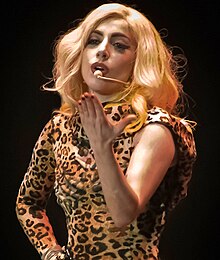
Gaga teaches an old broad new tricks

I’m a writer first but I have a passion for art, for exploring my universe and for music. I’m not a big fan of television, especially when any interesting program has to be interrupted by up to a dozen commercials, and when the network has to float previews and banners on top of a show I’m watching.

This week I will end my cable connection, won’t install an antenna and will use my high-def TV for watching videos and music that appeal to me.

To celebrate the upcoming event, I decided to spend yesterday with the set running as background noise. That’s when I stumbled upon a network called fuse and a show called the Gaga-Thon.

Now I’m fully aware of the presence of this performer, Lady Gaga, and I’ve heard her music on the radio. But like many people of my generation, I dismissed her as a show woman on a roll. Honestly, she clothes herself in meat, wears high heels that would give most women a nosebleed and presents herself in some very provocative videos, all of which separates her from the accepted ethics of most of us who are over the age of thirty.

Gaga talked about the reasons behind her “outrageous” look, her suggestive videos and her evocative lyrics. She is, in essence, a woman with a mission, a woman who represents a movement via popular culture to bring attention to important social issues.


The program captivated me and taught me a lesson every writer should learn.

Open your mind a well as your eyes and ears. Don’t dismiss anything until you’ve had time to research, investigate and experience it. Use BOTH side of your brain.

Maybe you won’t fall in love with Lady Gaga but you might. And if you don’t, you’ll still have some new tricks to add to your writing.